Planning a mixed-container material order requires a shared shipment matrix, clear cargo-ready gates, compatible handling, an approved loading plan, and reconciled documents. Buyers should track each supplier lot through consolidation and record any quantity, timing, or packaging change before sealing the container.
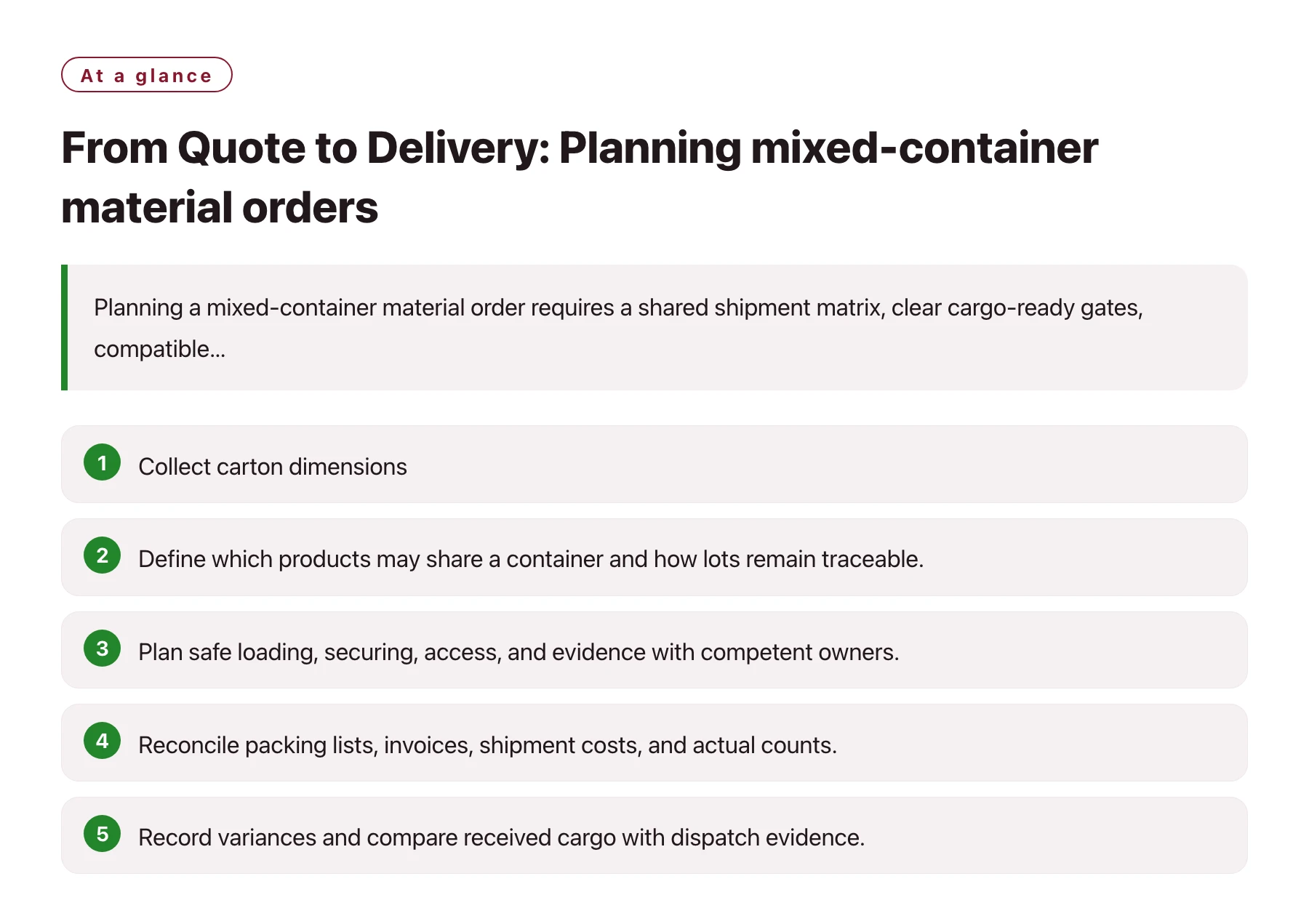
Key takeawaysCollect carton dimensions, weights, quantities, and readiness by supplier. · Define which products may share a container and how lots remain traceable. · Plan safe loading, securing, access, and evidence with competent owners. · Reconcile packing lists, invoices, shipment costs, and actual counts. · Record variances and compare received cargo with dispatch evidence.
Combining goods can simplify coordination, but a single container can also connect several suppliers’ delays and discrepancies. A structured plan makes those dependencies visible before booking.
Build a shipment matrix before booking
Mixed-container orders combine products that may differ in size, weight, fragility, handling, and readiness date. Create a shipment matrix by supplier and item with order reference, quantity, carton count, dimensions, gross weight, packaging type, stack limits, and cargo-ready date. Add destination, consignee, and any handling restrictions that affect loading.
Separate confirmed data from estimates. Ask each supplier for final packing dimensions and weights after the approved configuration and packaging are known. Mark pending figures and assign an owner and deadline. Freight plans based on early catalog dimensions can become inaccurate when cartons, pallets, or product kits change.
Decide which items are eligible to share a container. Consider compatibility, cleanliness, odor, moisture sensitivity, crush risk, access sequence, and whether one shipment delay would hold all cargo. Record excluded combinations and any segregation or barrier materials required.
Sequence suppliers and cargo readiness
Choose a consolidation point and define who receives, counts, identifies, and stores each supplier’s goods. Set a latest delivery date for each lot and require notice when a production or inspection milestone slips. Keep a buffer for count reconciliation, export documents, and loading arrangements rather than treating the last supplier’s promised date as the vessel cutoff.
Use one shipment identifier across purchase orders, carton marks, packing lists, and warehouse records. Label supplier, item, lot, and carton sequence clearly. If one order arrives in several lots, keep those lots distinct until the buyer confirms they can be combined without losing traceability.
Create a readiness gate: production complete, required checks passed, quantities reconciled, labels approved, packaging intact, documents collected, and buyer release recorded. Goods that have not passed the gate should remain on hold or be moved to a later shipment with an updated cost and schedule review.
Plan safe loading and cargo compatibility
Share the shipment matrix and handling instructions with the consolidator and loading team. Plan load sequence around unloading needs, distribution of weight, stacking strength, load securing, and the protection of fragile or moisture-sensitive products. Avoid placing heavy cartons on crush-sensitive goods or allowing goods to move into empty spaces during transit.
The IMO/ILO/UNECE CTU Code provides guidance on packing and securing cargo transport units. Buyers should use cargo-specific packaging and loading requirements alongside that guidance and assign technical decisions to competent personnel.[1] Record who checks the transport unit, approves the load plan, and verifies securing before dispatch.
Decide whether the buyer requires a loading observation, photographs, count record, seal details, or other evidence. Specify when images should be taken: before loading, during placement, after securing, and at closure. These records support later review but do not replace the carrier’s transport obligations or a qualified cargo-securing assessment.
Reconcile documents and costs
Before release, compare each supplier’s quantities with received cartons and the consolidated packing list. Confirm product descriptions, marks, weights, dimensions, shipping instructions, and commercial invoice references with the responsible document issuers. The buyer or broker should verify destination-specific entry requirements and customs classifications.
Request a cost breakdown for supplier pickup, consolidation, storage, handling, palletization, export clearance, freight, insurance, destination charges, and any special equipment. Identify which figures are estimates and which are committed. Compare the cost of combining goods with the alternative of separate shipments, including the impact of delay and inventory timing.
If one lot is short, damaged, or late, decide whether to hold the container, ship the available goods, or defer the affected items. Document revised quantities, cost, booking changes, and invoice updates. Do not allow a packing-list revision to obscure which purchase orders and lots are actually present.
Close the shipment and retain evidence
At loading, reconcile the actual carton count against the approved matrix and note exceptions before the container is sealed. Record container identifier, seal number, loading date, and responsible contacts. Keep a copy of the final packing list and any variance approval with shipment records.
At destination, compare received quantities and condition with the dispatch record. Photograph damage, wet cartons, broken seals, or count discrepancies before rehandling where practical. Track which supplier lot and container position are involved, then notify the responsible party under the agreed claim process.
For JS Sourcing building materials sourcing, buyers can define support for supplier coordination, consolidation planning, or loading observation. State which party books transport, controls the warehouse, approves the load, prepares documents, and owns discrepancy escalation. Close the order only after the final quantities and records are reconciled.
Sources
Frequently asked questions
When should the shipment matrix be finalized?
Start it during order planning and confirm dimensions, weights, quantities, and dates as production and packaging are finalized, before freight booking.
Can any building materials be loaded together?
No. Evaluate weight, crush strength, cleanliness, moisture sensitivity, odor, handling, securing, and unloading sequence before combining products.
What should be recorded before a container is sealed?
Reconcile actual carton counts, identify variances, record container and seal details, and retain the approved packing list and release decision.
Who should approve the load plan?
Assign approval to a competent party familiar with the cargo, transport unit, securing method, and applicable shipping requirements.