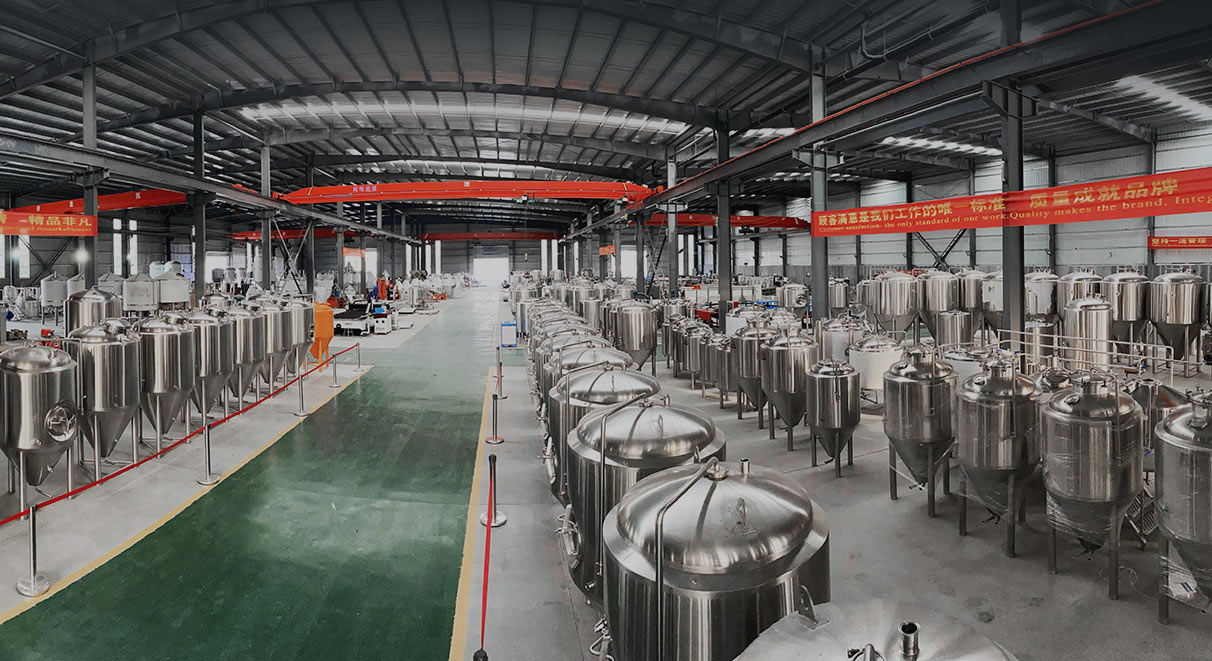
Turn-key brewery solutions matter because brewery capacity depends on more than brewhouse size. A 20 hL brewhouse running three turns can produce about 60 hL of wort in one brewing day, but that output is useful only when fermentation space, glycol cooling, hot-water storage, CIP, utilities, labor, and packaging can handle the same production rate. In 2024, the European Union had 9,553 breweries and produced about 33.56 billion liters of beer, showing how widely brewery scale and operating models vary. A turn-key plan connects production volume, equipment sizing, utility demand, layout, installation, and startup before fabrication begins.
A brewery starts with an output target, not a tank catalog. A 20 hL brewhouse producing two batches per day for 4 brewing days can make 160 hL of wort per week before process losses. If an ale occupies a fermenter for 14 days, roughly two weeks of production may need cellar space at the same time. Longer conditioning periods raise that requirement again, so buying a larger brewhouse without adding cellar capacity can leave expensive equipment unused.
The market itself shows why one standard equipment package cannot fit every project. The Brewers of Europe reported 9,698 active EU breweries in 2022, including 6,436 microbreweries; France alone accounted for about 26% of active breweries that year. A small taproom brewery producing several recipes each week needs a different vessel mix from a regional brewery filling cans or kegs every day.
That production plan determines the equipment relationship:
-
A 10 hL brewhouse paired with 20 hL fermenters can use double batching, but the second batch needs enough brewhouse time, hot liquor, cooling capacity, and operator availability.
-
A 20 hL fermenter filled to working volume needs headspace for fermentation rather than being filled to its geometric maximum.
-
Six 20 hL fermenters provide a very different production schedule from twelve 20 hL fermenters, even when both plants use the same brewhouse.
-
A packaging line rated above brewery output may provide expansion room, while a line below finished-beer output can create longer bright-tank occupancy.
Once tank quantities are set, utility sizing follows. Water is used for brewing liquor, vessel cleaning, floor cleaning, rinsing, packaging, and utility systems. The Brewers Association treats water consumption and wastewater management as major operating issues for breweries and maintains dedicated brewery water-management guidance. A plant producing 2,000 hL per year should therefore be planned around total facility demand rather than only the water contained in finished beer.
Heating requires the same type of calculation. A steam brewhouse may need a boiler, steam header, pressure control, condensate return, ventilation, feed-water treatment, and properly sized connections. Electric systems shift more demand to the building's electrical service. If several heating elements, pumps, chillers, and a packaging line operate at the same time, peak electrical demand can be much higher than the average figure shown on a monthly utility bill.
Cooling capacity must then match the production calendar rather than tank count alone. Wort cooling, fermentation heat removal, cold crashing, bright-beer storage, and cold-room demand can overlap. Cooling twenty tanks that are already holding beer at 2°C is not the same task as pulling several freshly fermented tanks from 18°C to near 2°C during the same 24-hour period.
Equipment specifications are more useful when they state operating conditions: batch volume, flow rate, inlet temperature, outlet temperature, pressure, heat load, connection size, and expected daily operating hours.
Those conditions become especially useful when comparing a Brewery/Distillery/Winery All-In-One Solution with equipment bought from separate suppliers. One integrated supplier can establish common connection sizes, control requirements, pipe specifications, tank geometry, pump duties, utility points, and commissioning responsibilities before equipment reaches the site.
| Planning item | Example design input | What it affects |
|---|---|---|
| Brewhouse | 20 hL × 3 turns/day | Daily wort output |
| Fermentation | 12 × 40 hL tanks | Cellar production cycle |
| Fermentation time | 14–21 days | Required tank availability |
| Cold crash | 18°C to 2°C | Peak glycol requirement |
| Packaging | 1,500 cans/hour | Finished-beer handling |
| Operation | 5 days/week | Weekly utility and labor use |
The numbers in the table are planning examples rather than universal specifications. Their relationship matters more than any single figure. A canning line rated at 1,500 cans per hour can theoretically package 500 cases of twelve 330 mL cans during a 4-hour run, before stops, changeovers, cleaning, rejects, or maintenance are counted. Packaging therefore needs realistic operating efficiency rather than nameplate speed alone.
Physical layout has a similar effect on daily work. Tank diameter may fit on a floor plan while tank height conflicts with roof beams, sprinkler systems, lighting, or lifting clearance. A fermenter may also need top-access space for fittings and enough side clearance for valves, instruments, insulation repairs, and cleaning connections. Moving a 40 hL or 80 hL vessel after walls and doorways are finished can require far more work than moving it during building preparation.
Drainage needs to be planned at the same stage. Wet-process areas regularly handle cleaning water, product spills, and CIP discharge. Floor slope, trench placement, drain capacity, chemical compatibility, and wastewater routing should match the final tank and piping positions. Relocating a drain after a reinforced production floor has been completed adds construction work that drawings could have addressed earlier.
Sanitary piping also affects product quality and cleaning time. Long pipe runs hold more product and cleaning solution than short runs. Poorly positioned branches can retain liquid, while undersized piping can restrict transfer rates. Oversized lines increase liquid volume and can make it harder to achieve the flow conditions expected during cleaning. A turn-key layout can size product, CIP, water, glycol, steam, and compressed-air lines together rather than treating each trade separately.
CIP deserves its own capacity calculation. A brewery cleaning a 20 hL fermenter has different circulation requirements from a facility cleaning an 80 hL vessel. Tank spray devices, pump flow, return rate, chemical concentration, contact time, and temperature all influence the cleaning cycle. A 30-minute circulation step repeated across 10 tanks already represents 5 hours of circulation time before rinse, chemical preparation, recovery, and operator handling are included.
Automation can reduce repeated manual work, but the useful level depends on production scale. A 2022 brewery with several small batches may only need automatic temperature control, pump speed control, and brewhouse timing. A larger plant may use PLC-controlled valves, recipe steps, tank temperature logging, CIP sequences, flowmeters, and centralized alarms. Automation costs rise quickly when hundreds of valves and instruments are added, so the control scope should be defined before the piping design is frozen.
The same planning process needs to include regulatory records. In the United States, TTB requires breweries to maintain daily operational records, alcohol-related records where applicable, inventory records, and records of unsalable beer. Required records generally must be preserved for at least 3 years. Equipment that measures production, tank quantities, transfers, or packaging can therefore support both production management and required recordkeeping.
Federal qualification also begins before commercial beer production. TTB states that a brewery or brewpub must qualify for a Brewer's Notice, while state and local requirements can include zoning, building use, and other approvals. A building selected before equipment and utility requirements are checked may later need electrical, drainage, ventilation, fire-safety, or structural changes.
Safety planning belongs in the equipment layout for the same reason. Fermentation produces carbon dioxide, and OSHA notes that CO₂ can accumulate during fermentation and in areas associated with grain and fermentation processes. Tank placement, ventilation, gas detection, access routes, confined-space procedures, and worker training therefore need to be considered while the facility is being designed, not after production starts.
A tank list shows what a brewery owns. A process plan shows how many batches can move through brewing, fermentation, conditioning, cleaning, and packaging during the same week.
Installation planning connects the drawings to the physical plant. Heavy vessels may need to enter before exterior walls or doors are completed. Utility drops need to land close to their equipment connection points. Control panels require suitable electrical locations. Glycol piping needs insulation and room for service. Platforms require safe access without blocking valves, manways, or future tanks.
Commissioning then checks whether the installed system matches the design. Pumps can be tested for rotation and flow, temperature probes can be checked against reference instruments, valves can be verified, tank jackets can be tested, control sequences can be reviewed, and water runs can reveal piping or drainage issues before product enters the system. Finding an incorrect valve position during water testing is less disruptive than finding it during the first 20 hL production batch.
Future expansion should also appear on the original layout. European brewery figures changed from 9,203 active breweries in 2020 to 9,698 in 2022, while the market included thousands of small producers with different growth paths. A new brewery does not need to buy every future fermenter on day one, but leaving floor area, piping connection points, electrical capacity, and glycol distribution provisions can make later additions simpler.
Budget planning becomes more accurate when scope is written at system level. A tank quotation may exclude freight, rigging, platforms, sanitary piping, glycol distribution, electrical work, commissioning, spare parts, controls, or local installation. Comparing two vessel prices without comparing those items can produce a misleading project total.
A useful equipment proposal therefore states boundaries clearly: who supplies the chiller, who connects steam, who installs sanitary piping, who provides electrical cables, who programs controls, who performs pressure testing, and who supervises startup. The purchase price matters less when an omitted interface later requires site modification.
For a brewery expected to operate for 10–20 years, maintenance access also deserves space in the original design. Pumps need room for seal replacement, heat exchangers need access for inspection, motors need service clearance, valves need replacement space, and instruments need calibration access. Packing every available square meter with tanks may increase installed cellar volume while making routine maintenance slower.
Supplier documentation helps preserve that operating knowledge after installation. Useful project files include general arrangement drawings, piping and instrumentation diagrams, electrical schematics, utility schedules, equipment manuals, valve lists, spare-parts lists, control descriptions, and commissioning records. TTB's 3-year brewery record requirement is one regulatory example, while engineering records are commonly retained much longer because equipment may remain in service for decades.
When brewery planning starts with annual volume, batch schedule, tank residence time, packaging format, utility limits, building dimensions, and expansion assumptions, equipment selection becomes measurable. A turn-key project can then match brewhouse output to fermentation space, cooling capacity, cleaning time, packaging rate, safety requirements, and available infrastructure instead of asking separate suppliers to resolve those relationships during installation.